✦case_study · spec work
Oura
Customer research and a creator script for people who want to understand their sleep but find a smartwatch uncomfortable to wear overnight.
SHEETOpen the full research workbook↗
Spec project, October 2026. Not commissioned by or affiliated with Oura. All ad data is public (Meta Ad Library via Foreplay).
The process
~/oura/processFrom ad-library patterns to a creative hypothesis and final script. Explore the research and the decisions it informed.
Pull the ad library
The research snapshot compares existing Oura creatives, including wearable-abandonment testimonials, ring-versus-watch explanations and lifestyle-led stories.
| reference | creative pattern |
|---|---|
| Wearable abandonment ↗ | A personal experience leads into the depth of insights in the app. |
| Ring versus watch ↗ | A curiosity-led explanation of what makes the ring different. |
Source: saved Foreplay research and the completed workbook. Library presence does not establish spend or ad performance.
Find the opening
The existing research shows broad wearable abandonment and curiosity about what a ring can track. This concept makes the friction specific: a watch removed while trying to settle into bed.
Show the familiar nightstand moment, then explain the ring and app through a relaxed morning conversation. Give the watch and ring different roles: workouts and overnight insights.
The product explanation follows the lived problem, so the sensors and app answer a question the audience already has.
Listen to customers
Customer accounts connect overnight comfort with an existing interest in sleep tracking. Some owners pair the ring with a watch rather than replacing the watch altogether.
Customer account ↗
Customer account ↗
Customer account ↗
Qualitative customer evidence, not a measure of how common each experience is. Individual comfort varies.
Check the claims
The script connects a complete night of data with the Sleep Debt view across two weeks, then introduces Symptom Radar as a way to flag signs of strain when temperature or resting heart rate differs from a person’s usual range.
That view makes a pattern visible and gives the creator a concrete reason to consider an earlier bedtime. The app values in the visual references are illustrative.
The story invites exploration of sleep habits without promising improved focus or treatment of a sleep condition.
Write the hypothesis
The audience already owns a smartwatch, enjoys health data and wants to learn about sleep, but finds wearing a watch overnight uncomfortable.
Opening on the moment a watch comes off while someone is trying to fall asleep should resonate with smartwatch owners who want sleep insights but find wrist-wearing uncomfortable. Presenting Oura as an alternative form factor gives them a reason to consider another device.
The two audience profiles explore complementary motivations: keeping the watch for workouts and reducing the discomfort of wrist-wearing at bedtime.
The hypothesis is grounded in customer accounts. This is a completed spec concept; no campaign results are claimed.
Build the script
Three hooks introduce one story. A question about focus creates a reason to understand sleep, but the watch keeps ending up on the nightstand.
TikTok and YouTube spark curiosity; a Pilates-instructor friend makes the features concrete. Sleep Debt, overnight comfort and the ring’s appearance lead into a complete night of data, an earlier bedtime and a Symptom Radar example. The CTA includes the script’s illustrative $100-off offer.
The script
~/oura/scriptCreator to camera, 9:16. Visual references illustrate the intended production. The sale offer is illustrative for this mock ad.
My smartwatch could track my sleep. I just couldn’t make it through a full night wearing it.
I kept hearing about sleep debt. That made me wonder how much was I building up without realizing it?
After so many nights trying to get comfortable with my watch on, I finally found a way to track my sleep without losing sleep over it.
I thought missing sleep only mattered when I felt tired. Hearing Huberman talk about focus made me question that.
Huberman tweet reference.
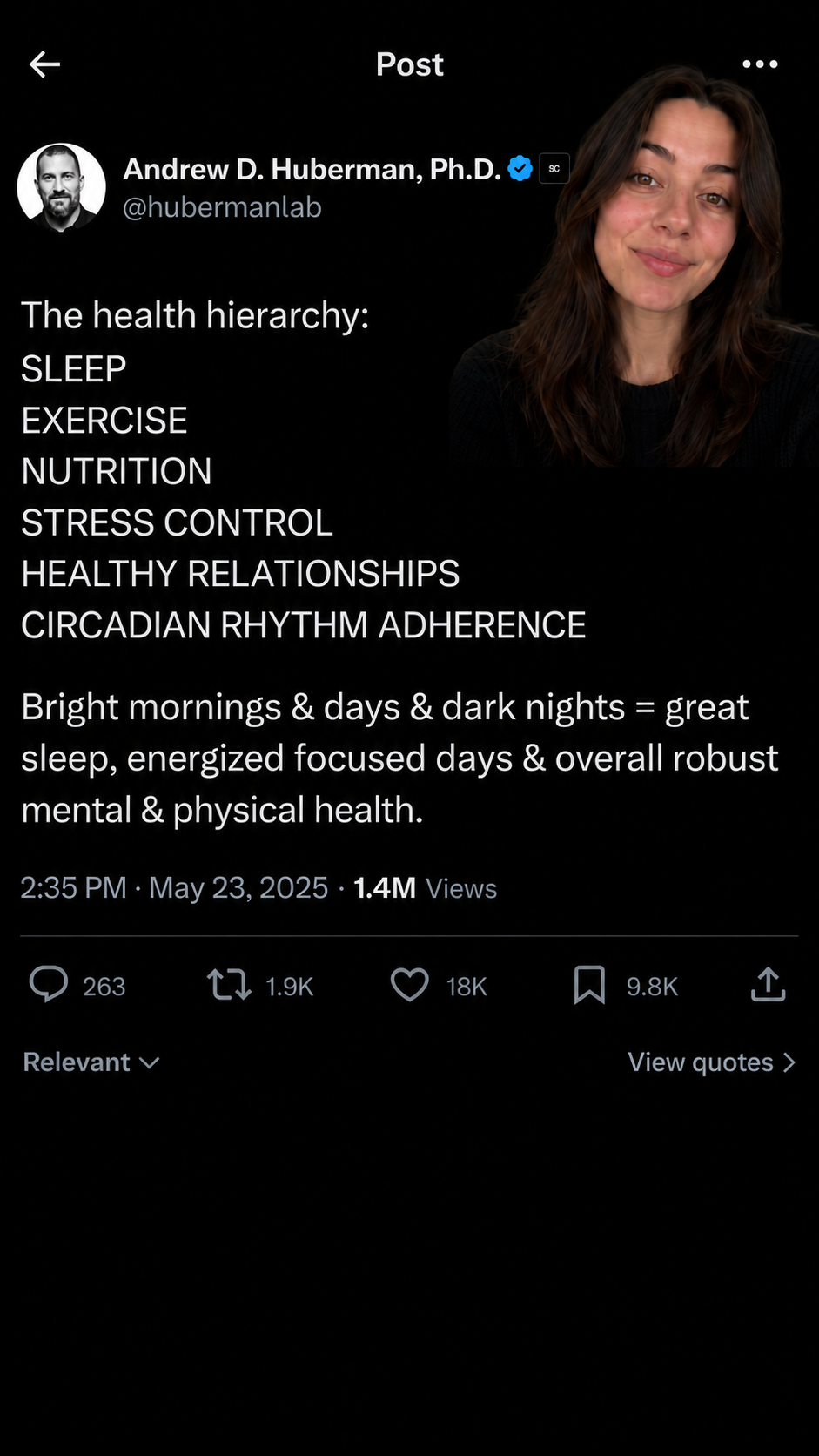
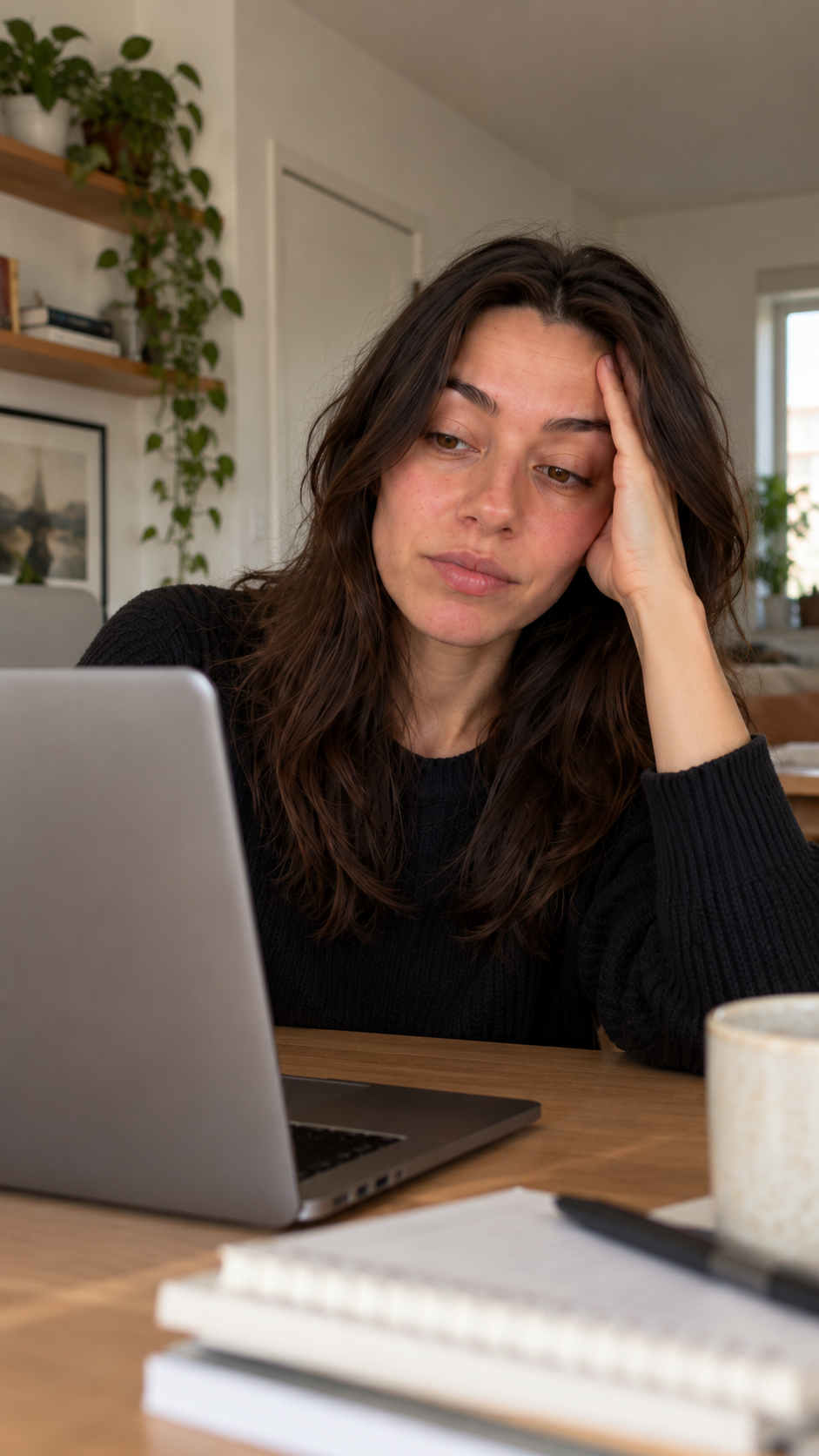
Some mornings, I’d sit down to work and keep rereading the same sentence and felt soo exhausted. Even after feeling like I slept 8 hours, so why was focusing still such a struggle? I wanted to see what was happening at night.
Desk B-roll: laptop in frame, hand on head, struggling to focus.
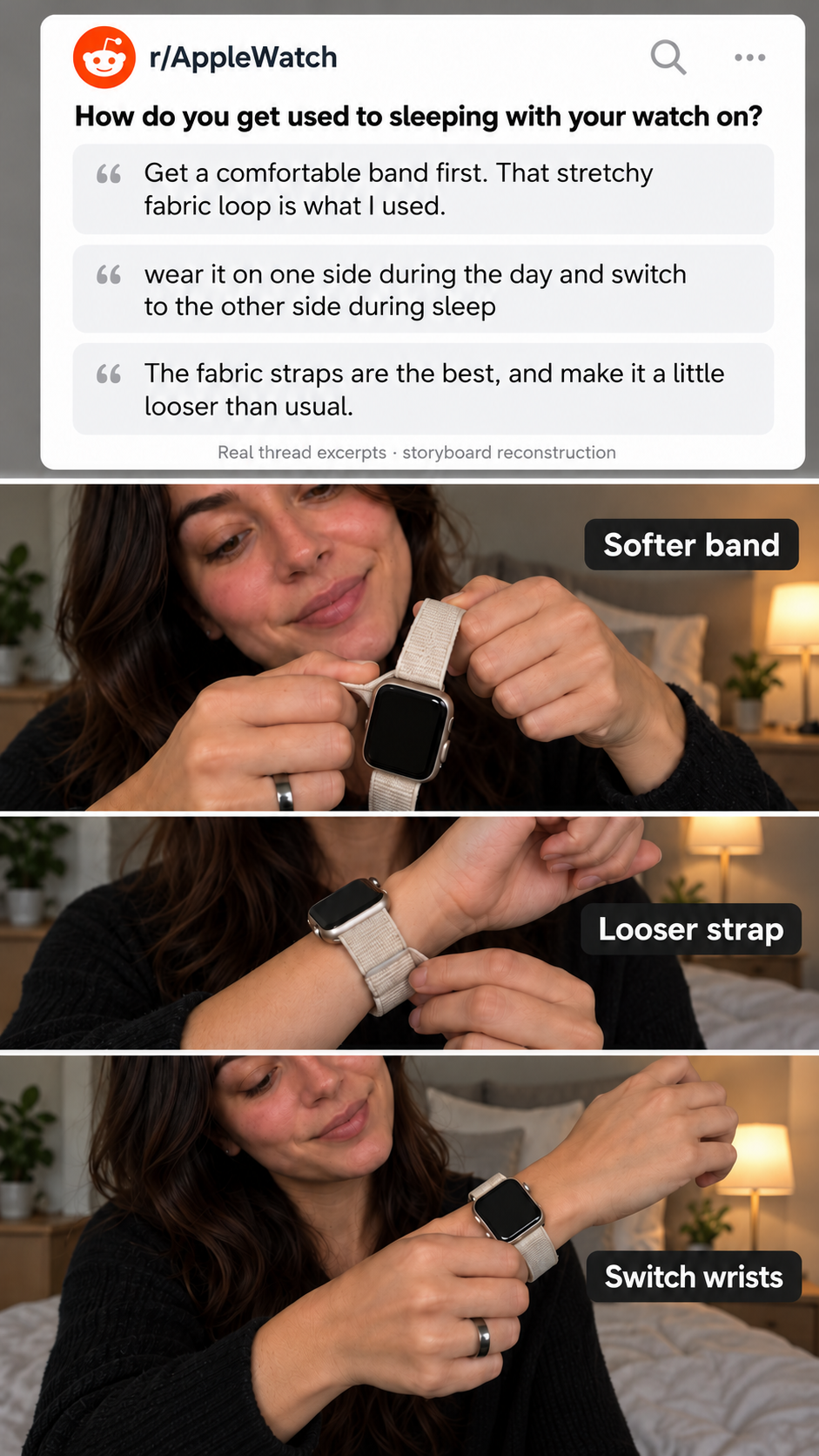
Having it on in bed made it absolutely impossible to fall asleep. So I started trying the tips I found on Reddit: a softer band, a looser strap, even switching wrists, but nothing worked, so I would end up removing it.
Brief Reddit-scroll insert, then three quick shots: softer band, looser strap, switching wrists. Thread: https://www.reddit.com/r/AppleWatch/comments/1s1d0w3/how_do_you_get_used_to_sleeping_with_your_watch_on/
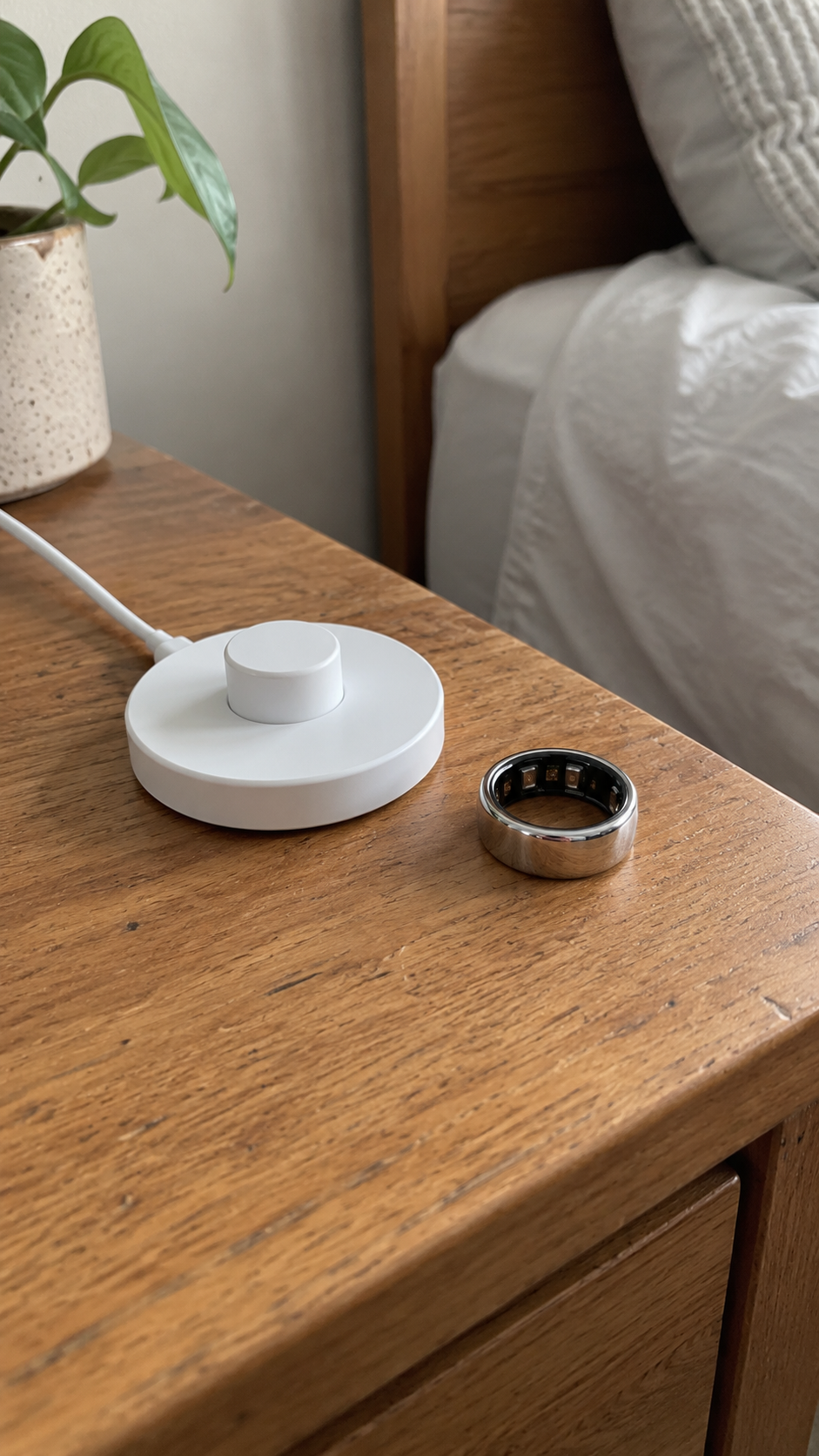
I kept seeing people talk about Oura on TikTok and YouTube. At that point, I had to know what the hype was about.
Candid shot of the ring alone beside its charger on a bedside table. Hold briefly, then return to the creator.
I’d heard of it, but I wasn’t convinced another wearable would feel any different. Then I talked to a friend who has the ring. She’s a pilates instructor, so I was curious how she kept up with those early classes and still had energy throughout the day.
Two friends talking; friend shows her actual Oura sleep summary on her phone. Keep this a brief natural insert.
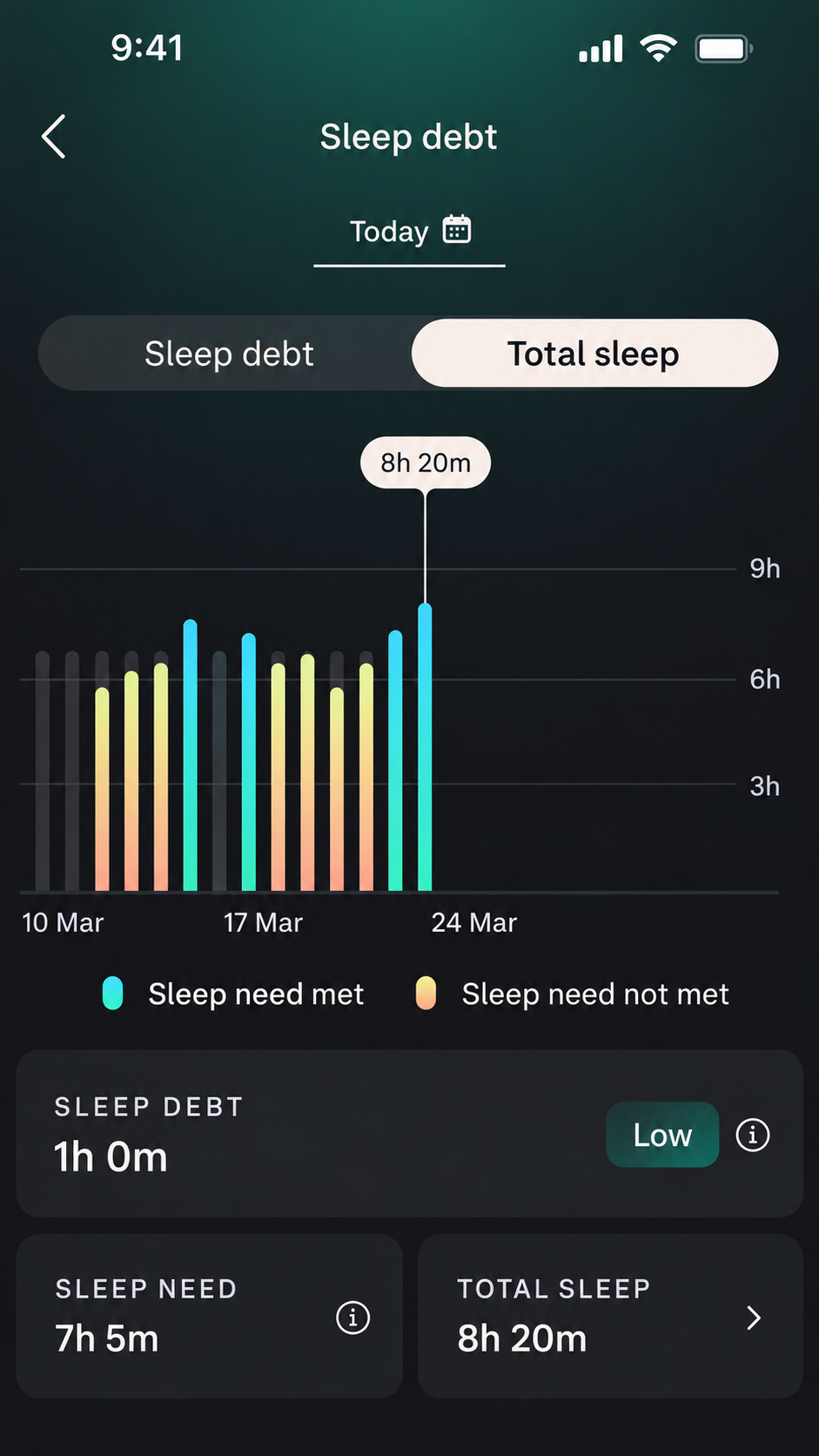
She showed me the Sleep Debt section too. It estimates how much sleep you may have missed over the past two weeks. I’d been judging my sleep one night at a time. Now I wanted to see the bigger picture.
Close-up of the friend’s Oura Sleep Debt view as she shows her data. Reference shows illustrative example values; capture the creator’s genuine app screen for filming.
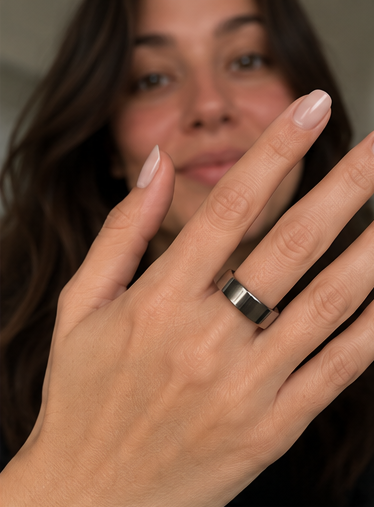
She even said that she’d forget she was even wearing the ring. That’s what made me want to try it. And honestly, it’s cute. It just looks like a ring I’d wear anyway.
Return to creator, then close-up of the ring on her hand as she describes the reassurance.
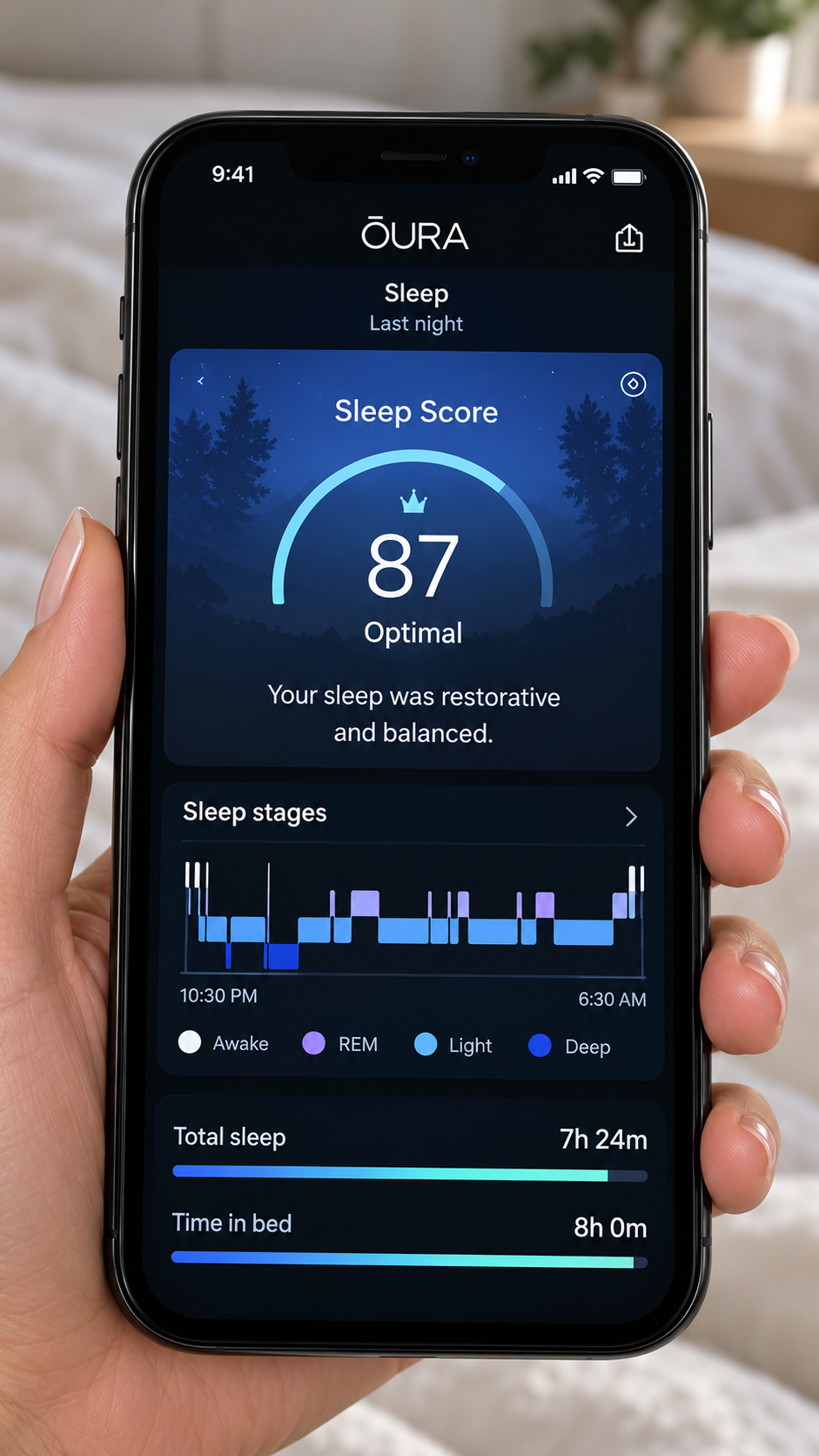
When I got it, for once, I could actually see a full night of sleep data instead of another gap where I’d taken my watch off
Close-up of a complete night’s Oura sleep report; illustrative reference values.
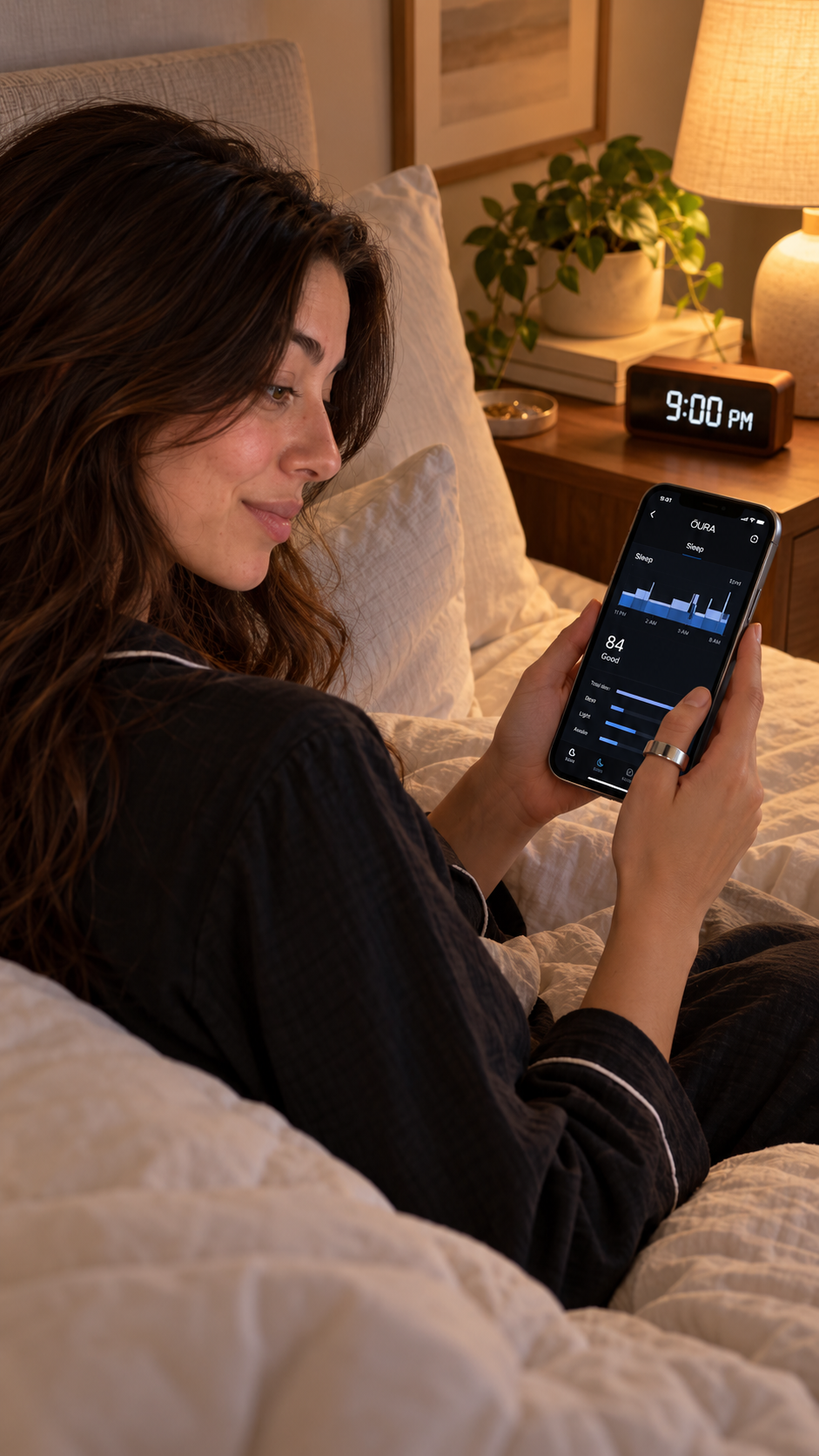
Before I had a feeling I should probably get more sleep. But seeing how much I was actually getting and the compounded effect of that made me want to do something about it. Going to bed earlier finally felt like a goal worth taking seriously.
Separate-camera bedroom shot: she reviews her sleep data on her phone in bed, bedside clock showing 9 PM.
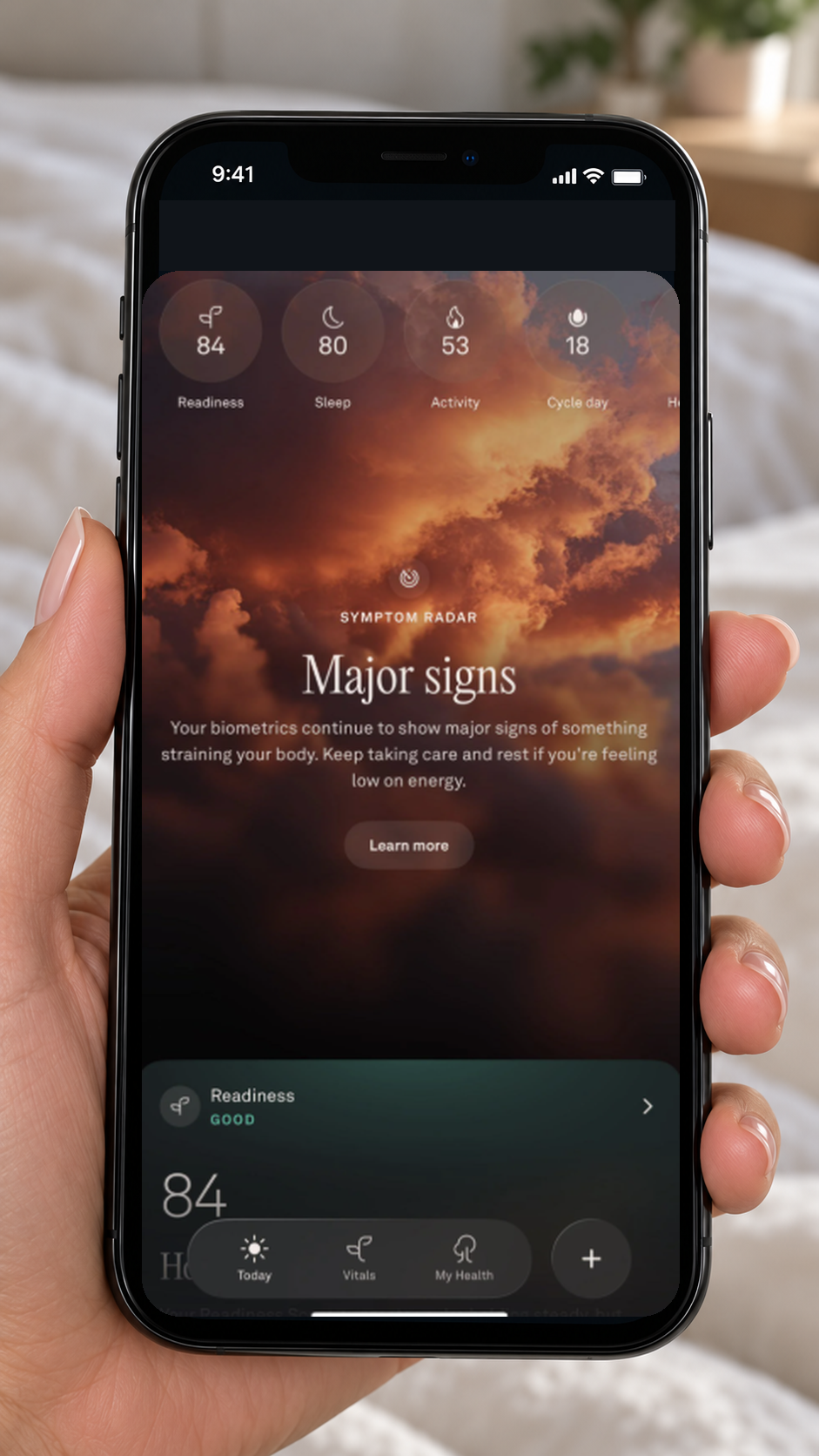
She also showed me a screenshot of how it flags signs of strain when things like your temperature or resting heart rate are outside your usual range.
Close-up of the friend’s phone showing the orange-cloud Symptom Radar screen with “Major signs.” Hold on this screen as the voiceover explains that it can flag when your body is under more strain than usual. Use a genuine app screenshot or screen recording, matching the supplied reference.
I still like my watch for workouts. But when it comes to sleep, the ring just makes more sense for me.
Creator to camera; brief workout-watch insert, then gesture toward ring for sleep.
Tired of guessing how much sleep you’re getting? Oura is on sale right now. 100$ off selected style. Tap the link to shop.
Creator speaks directly to camera, wearing the ring and pointing toward the link.